Who is certain of tomorrow?
1
Tomorrow
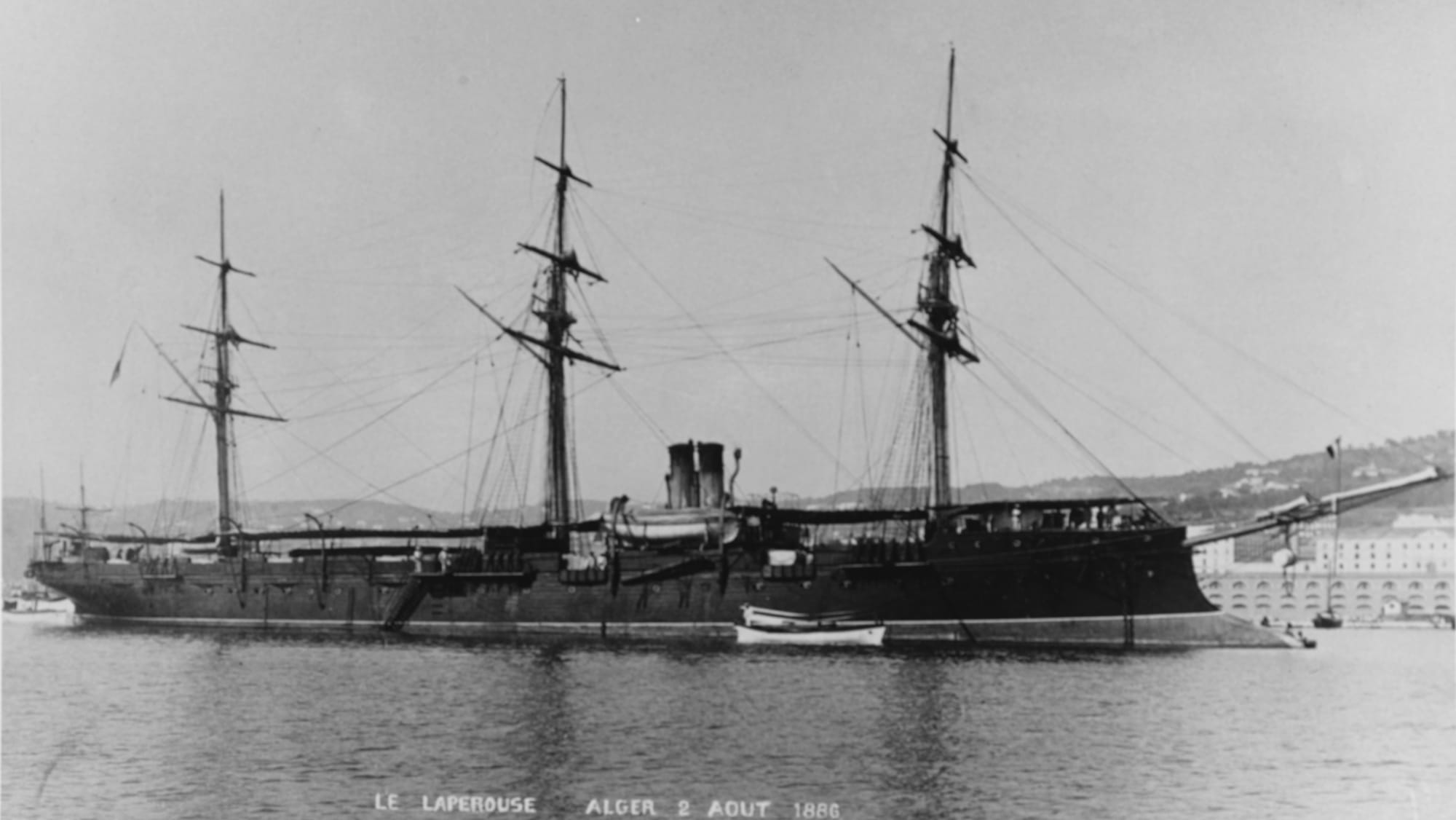
THE LAST QUEEN of Madagascar is prodded onto the ship Lapérouse, an unprotected cruiser of 17 guns, sail and steam, at the ragged entrepôt of Tomasina, in the east of her country.
Ranavalona III moves reluctantly, and weaves, for she is heavy with toaka gasy, the traditional rough rums that are by now among the few working currencies of her disappearing realm.
She is 36 years old; and already besieged by regrets, both ancient and many.
She is accompanied by Razafinandriamanitra, her 14-year-old niece, in her last month of pregnancy by rape by an anonymous French non-commissioned officer. Also in her last month of life.
In a haze of despair, or revelation, or both, at the ship’s rail she cries, “Who is certain of tomorrow? Only yesterday I was a queen; today I am just an unhappy, broken-hearted woman.” No-one replies.
She leaves the Menalamba Rebellion behind. Their red shawls, daubed in the blood-red mud of their land, will fade from history. Along with the summary executions of its leaders. They will become overlooked history. And with it, and them, dies hope. For now.
The Queen’s retinue has shrunk from 800, to eight. She was carried down from the highlands in a palanquin ( /ˌpalənˈkiːn/ ), through the dry-red-thorny country, Mātětāaně the Land of Death. The carriers have gone home. At least, they have tomorrows. Mamy ny aina: Life is sweet.
The Queen’s British servant, Clara Herbert says nothing. She is too busy attending to the prodromal labour spasms of the girl. Who whimpers.
Clara dares not take in the wider view. Because, for the first time in her life, her reserve might collapse. She may dissolve too. Such is the nature of this o’erweening tragedy that engulfs them.
There is no tomorrow. Only this pain of the now.
It is Sunday 7 March 1897. The Medina dynasty, which has survived for 357 years, is no more.
Beyond Ilay Harandriak Lehibe, the spray-shrouded, harbour-fringing reef, beyond the thundering breakers of the Indian Ocean – unbroken all the way to Indonesia where her earliest ancestors came from – a line squall, heavier, harder, darker and more insistent than most, has kidnapped the eastern horizon.
Lapérouse sails for La Réunion in the murk of a fetid dawn. Her sharply forward-raked bow, as sinister as a scimitar, rises to incoming seas.
The girl is still weeping. The Queen raisers another tumbler of rum to her numbed lips. Clara feels the first unease of seasickness that is to develop into crippling nausea and all-round disability. Even a private, secret, never-admitted-to-for-the-rest-of-her-life, desire to die.
The island-almost-continent sinks into their wake. Sullenly, like a litany of unspoken vices. Like the flights of extinct birds. Repressed as unwanted thoughts. It’s their baggage left behind. Yet it also travels with them. Forever.
The dark-hulled ship ploughs on, black smoke streaming landwards from its twin funnels. The captain keeps the speed modest into this sea, a mere eight knots, well below her top speed under steam of 15 knots.
Still, she plunges. Great gouts of spray sweep her foredeck.
The rigging keens-wails, as a parliament of lemurs might do. This particular voice of the wind is remembered not beyond this day.
The Queen leaves her one child behind.
The secret one.
Just in case.
2
The gown
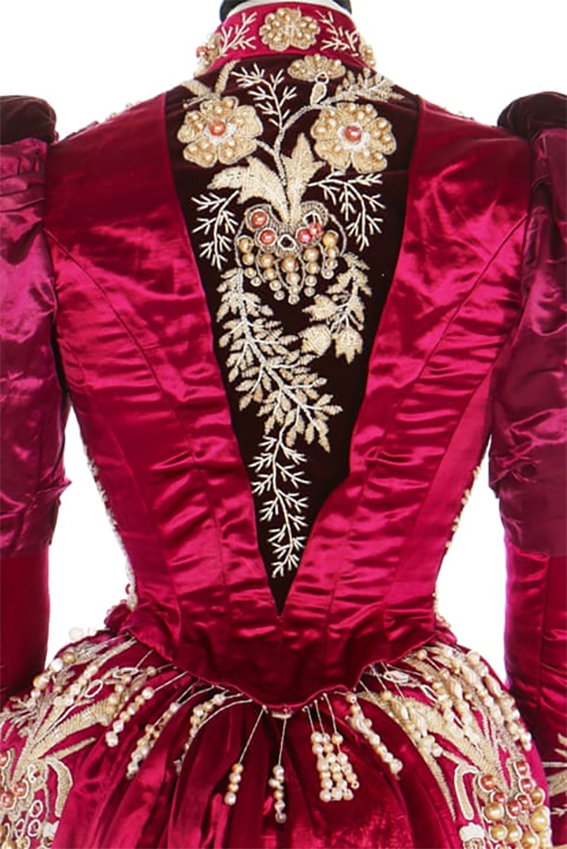
OF A VERMILLION that’s beyond feverish. Satin – or is it silk? – glowing with an inner fire that only itself knows. Yes it is – both silk and satin; the Duchesse variety. Soft, heavy, and glossy. Beating with a slow heart of inchoate and unquenchable desire.
Heavy – almost – as armour. And made only in France. For that is what the Queen and her aunt demand: only gowns that come from the hated oppressor.
There is, additionally, heavy symbolism here. But then, the whole island, the entire milieu of the Medina aristocracy, their commoners, slaves and enemies, their fulsome mythological universe, their very souls, they are all imbued – nay saturated – with that. For better or for worse. Probably the latter. The gown knows this. The wearer even more so.
A spray of tiny pearls about the waits, as a constellation of high and false expectations. On strings, made of gilded braid, each exactly three inches long. And each culminating in a short string of small smoky-gold pearls, each bearing only a prime number. The couturier ( /kʊˈtjʊərɪeɪ/ ) has a secret reason for that. One which we will not discover. Yet.
An arrow of black velvet, inset. Pointing downwards. Naturally., towards an impossibly tiny wait. An accusation. An assertion. An appeal. And a revelation.
The darkest night sky. A backdrop of all our unknown. Our deepest mystery. It’s all there, but far behind and obscured by the embroidery that lies as a trellis before it; ambushing our eyes, our expectations. Complex, dense. Floral, but not so; for in its intensity, it belies what flowers might be. It says ‘I’ll use your motifs, and I’ll fortify them. I will make them implausibly robust.’ These devices could stop a bullet from a derringer.
The opulence of its intentions. It’s rich beyond reason. It the only gown the haughty Queen of an impoverished, almost-beaten island people could wear. Unlike the kites she is so fond of flying, this gown, so splendid in its colours, it could never even consider flying. Its place is to be stately. Be a strict, as restrictive, as the state.
This gown. It speaks more than the Queen.
Who stands sullenly. Trying to fidget, but getting closer to fainting instead. Her breathing is shallow, almost reluctant. Pained.
But she must focus on her spouse, her second husband and forced lover, her Prime Minister, aged 51. And already father to 16 children. Elsewhere. As tradition dictates.
Such is the gilded, poisoned lot of the last Queen of Madagascar. Ranavalona III, aged 26 upon succession.
And dying for a drink. An aperitif of Beaujolais ( /ˈbəʊʒəleɪ/ ) would do nicely. Right now, even a quaff of betsa betsa, or toaka gasy, would be welcome. But the dreary business of state must drone on. An inspection of the troops of the Royals’ Guard.
High leather boots. Factories of fungus in the tropical air.
The sun bears down like an ultimatum. An indictment.
A soldier collapses with fever. He is ignored by all the others around him.
3
The parade
THEY ARE UNITED only by their mutual sheens of sweat under their heavy uniforms.
The Prime Minister, especially. Who is sitting, lounging really, legs graciously crossed, one finely-clad toe twitching languidly. His silver-topped riding crop, the one with the cruel hook at its tip, hanging uselessly from his indolent hand. His eyes lidded.
Their massed bayonettes a glittering hedge against all expectation. A curtain of jism in the high noon sunlight. A refusal. And also, an affirmation of nothingness. Of impending defeat.
For this army, despite its gaudy bravado ( /brəˈvɑːdəʊ/ ) here, will falter. We know this. All the actors in the scene know this. Such is the arc of history. Its inevitability verges on the tedious.
Rainilaiarivony sighs. Quietly.
Then again, extravagantly.
He knows history is against him, against them all. But still, the façade persists. It must.
In a town named Crocodile – Maevatanana – they will make their stand. Not really, for they will melt away at the first landings of French artillery fire. (It’s not a good thing to see your brothers blown skywards in fountains of red earth and bits of red meat.)
For now, the ceremony drags on, interminably. As if to postpone its own fate.
For exile is a death sentence. Only it’s one of uncertainty.
Which probably makes it worse.
Far worse.